

On Friday, February 13th, a new film hit theatres: Emerald Fennell’s Wuthering Heights, an adaptation of Emily Brontë’s literary classic. While similar book-to-screen projects—Austen’s Pride and Prejudice (2005) and Alcott’s Little Women (2019), for example—have been welcomed and widely celebrated, fans’ reactions to Wuthering Heights proved more divisive.
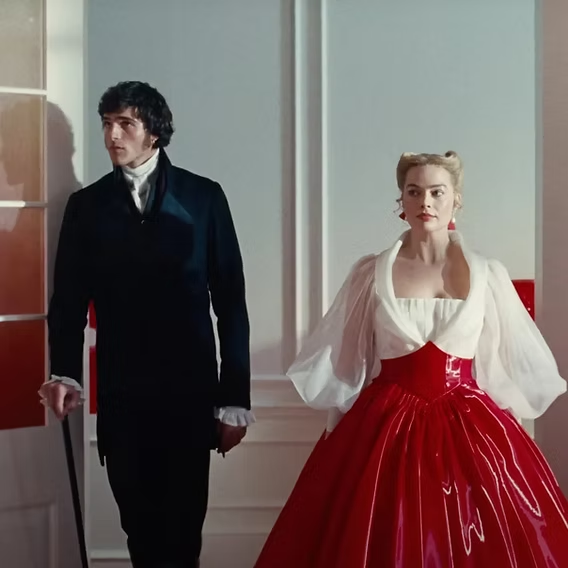
Brontë’s gothic novel narrates the love story of Heathcliff and Catherine Earnshaw—if it can even be called one. Therein lies the first complaint of admirers of the novel. Fennell’s film—which is undoubtedly b a modern interpretation—portrayed the story as a highly provocative, erotic romance. The original novel, however, is not a paragon love affair; rather, Heathcliff and Catherine share a love that transcends race and class and even death. At the same time, the novel broaches themes of obsession and self-destruction. It is a social critique of 19th century Victorian social conventions and, as some critics say, the epitome of toxicity. Brontë enthusiasts believe the film’s preeminence of romance and sexuality to be a trivialization of the original story.
Another of critics complaints lies in its aestheticization. Set in the Yorkshire Moors of Northern England in the late 1700s-1801, admirers expected that the film’s costumes and makeup remain steadfast to the novel’s historical context, as have other beloved period pieces. Fennell’s filmography, however, is known for its glossy, colorful aesthetic. The film is intensely colorful with historically inaccurate costumes; Catherine, for example, dons a pink, “plastic”-effect dress in one scene. In leaning so heavily on visual allure, the film appears dismissive of historical fidelity.

Even so, fans believe the biggest betrayal of the film not to be its eroticism or aestheticization, but its casting. For one, fans claim that the seven-year age gap between Jacob Elordi, who plays Heathcliff, and Margot Robbie, who plays Catherine, is apparent. At the same time, they believe Robbie possesses what many call an “iPhone face,” or one that is cosmetically enhanced and appears at home within the modern world. This, coupled with her pearly whites and dyed-blonde hair, results in the actress’ seeming out of place in a period piece like Wuthering Heights.
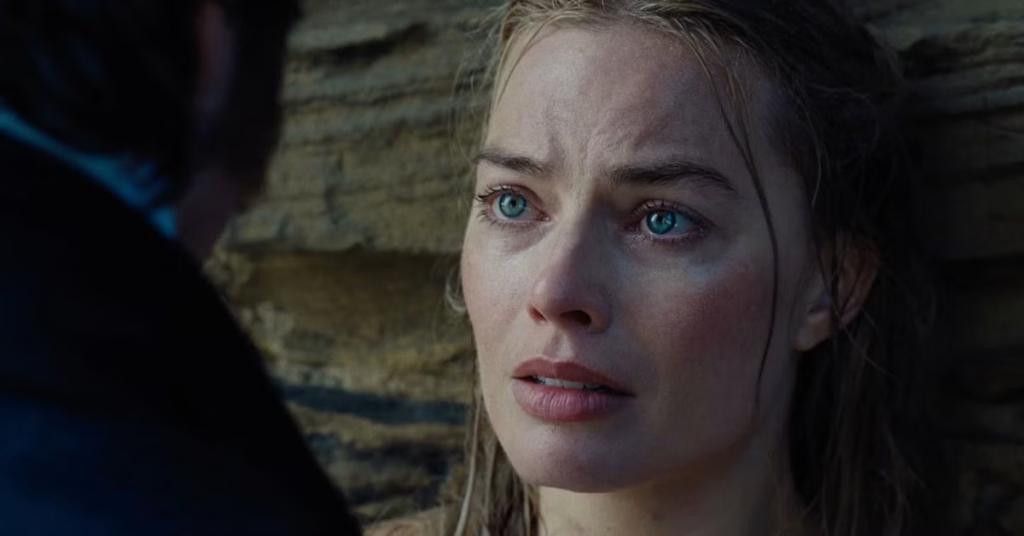
Still, Elordi’s casting has been most controversial. In part, what makes Wuthering Heights so radical is who the narrative unfolds between. White, wealthy Catherine falls in love with racially ambiguous Heathcliff, a fate deemed socially unacceptable at the time. With this detail so central to the book’s thematic framework, proponents of the film hoped a person of color would earn the role of Heathcliff. To their dismay, Elordi, a white man, landed it, and as a result, the adaptation went under fire. Upon being asked to speak on casting critiques, Fennell answered, “…you can only ever kind of make the movie that you sort of imagined yourself when you read it.” This response evoked uproar from many, who claim that, as a white woman, the film is a manifestation of Fennell’s white sexual fantasy, and that she understands nothing about the actual subject of the book and its characters. One commenter wrote, “..as in she physically couldn’t imagine a brown man as a romantic lead.”
In the midst of controversy, Fennell was not the only one under scrutiny; fans believed Elordi’s pursuit of the role despite knowing Heathcliff’s racial significance to be dismissive of the novel’s purpose and complexity. Around the same time, Odessa A’zion, an American actress of German-American and Jewish descent, was cast to play a character with Mexican heritage in A24’s upcoming film Deep Cuts. Upon receiving backlash, A’zion, who claimed to never have read the novel it is based on, backed out of the film within days. Fans compared her situation to that of Elordi, claiming that the disproportionate amount of backlash is a deep-seated reflection of patriarchy. They believe the Wuthering Heights actor should face the same retaliation and are disappointed by his lack of moral conviction. For many fans, Elordi’s continued participation symbolizes a broader unwillingness to confront the social weight of the story he now represents.

The controversy surrounding Fennell’s adaptation made evident the challenges of translating a beloved literary classic to the screen. From its marketed eroticism and glossy aesthetic to its casting choices, Brontë loyalists argue that the film undermined the novel’s complexities. More than a mere love story, the original work interrogates class, race, and obsession in ways that demand careful treatment—yet, critics contend, the adaptation prioritized spectacle and marketability over fidelity to these themes.
