

Have you ever watched Lady Bird, Little Women, or Barbie and wondered who was behind their brilliance? Even if you didn’t know it, you were seeing the world through the eyes of Greta Gerwig-one of the most distinctive voices in modern filmmaking. Once an aspiring young theater student, she is now a celebrated filmmaker known for her deeply personal storytelling and ability to capture the complexities of womanhood on screen.
Gerwig was born in 1983 in Sacramento, California, where her roots were planted in the arts. She attended an all-girls Catholic high school, balancing ballet rehearsals with theater productions. After graduating in 2002, she dreamed of studying musical theater, but instead chose to attend Barnard College in New York City, where she majored in English. In college, she threw herself into writing and performing plays, determined to become a playwright. When she was later rejected from graduate programs in playwriting, she began to explore opportunities in independent film.

While still in her twenties, Gerwig met Indie filmmaker Joe Swanberg and became part of a group of young artists experimenting with low-budget, conversational movies—a film style known as mumblecore. Gerwig’s natural charm and intelligence shone through in these movies, and she became both an actress and a collaborator, helping shape the very stories of which she was part. Over time, traction surrounding her increased, and she appeared in films directed by Ti West, Whit Stillman, and Woody Allen.
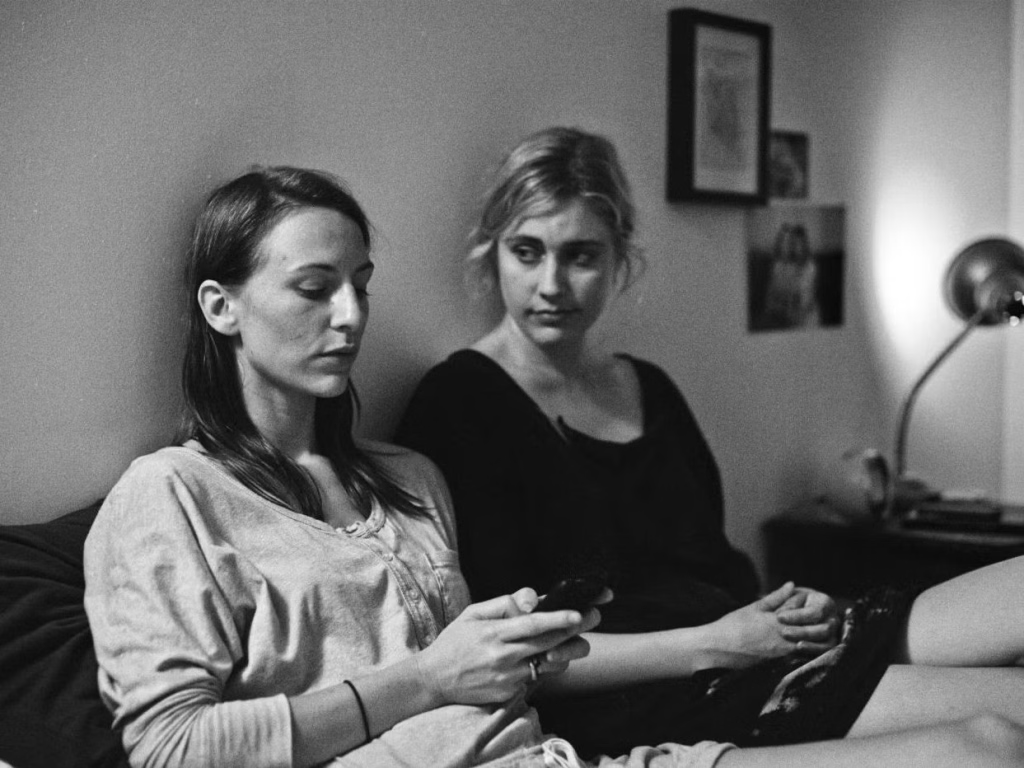
Her first big break arrived in 2012 with Frances Ha, which she co-wrote and starred in alongside director—and now husband—Noah Baumbach. Shot in black and white, the film followed a young woman stumbling her way through New York and her twenties. Critics took notice, and for the first time, the world began to see Gerwig not just as an actress, but as a writer and creative force.
Five years later, she stepped fully into her own story with Lady Bird (2017), her solo directorial debut. Set in her hometown of Sacramento, the film told the bittersweet story of a teenage girl navigating love, identity, and her complicated relationship with her mother. Lady Bird became a critical and box office success, earning five Academy Award nominations including Best Picture and Best Director. Overnight, Gerwig became only the fifth woman ever nominated for Best Director-a milestone that spoke not only to her talent but to the industry’s overdue recognition of women behind the camera.
In 2019, Gerwig returned with Little Women, breathing new life into Louisa May Alcott’s classic. Her version was vibrant and self-aware, blending the struggles of 19th-century women with timeless questions about creativity, independence, and ambition. The film received six Oscar nominations and solidified Gerwig’s place as a director with both heart and intellect.
Then came Barbie (2023). Bright, funny, and deeply philosophical beneath its pink plastic surface, the film redefined what a blockbuster could be. Starring Margot Robbie and Ryan Gosling, Barbie became a cultural event, sparking global conversations about gender, identity, and consumerism—and inspiring the viral phenomenon known as “Barbenheimer.” With over $1.4 billion in global revenue, nine Golden Globe nominations, and eight Academy Award nods, Barbie wasn’t just the highest-grossing film of the year—it was proof that a movie about women, made by women, could change Hollywood.
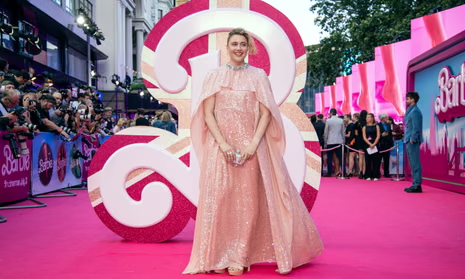
From small independent sets to billion-dollar premieres, Greta Gerwig’s career has been a story of persistence, curiosity, and vision. She has built a body of work that celebrates imperfection, growth, and the messy beauty of being human. Whether she’s writing about a restless teenager, a determined writer, or a doll discovering her purpose, Gerwig’s work stands as proof that persistence and vision can transform personal experience into art that speaks to an entire generation.
