

Shaping how people see us, fashion shapes cultures and trends; it presents our personalities, gives us confidence, and shows our stories to the world.The way we dress is how we are seen in society, so our fashion shouldn’t be based in short-term trends or on others’ expectations; it should be based solely on who we are.
What you wear is how you present yourself to the world, especially today when human contacts are so quick. Fashion is instant language. – Miuccia Prada.

Since the beginning of human development, the way we dress has helped others understand more about us. From a tuxedo to an oversized hoodie, the way we dress is the fashion we follow, or rather the style we create for ourselves. Allowing us to choose the ways we want to be seen and giving us the choice of who we want to be, fashion is part of the development of our personalities.
Fashion is a savior in important situations that helps tell a story with no words. Think about it, would you really respect your teacher if she showed up wearing a unicorn costume to school?Unconsciously, we let fashion define the way we see people, making it a big part in earning others’ respect.
Fashion can either give us confidence or take it away. For example, if you were to give a speech to the entire school, wouldn’t you feel a lot more confident if you were wearing something nice rather than sweatpants?
I firmly believe that with the right footwear one can rule the world. —Bette Midler


Every year, a new idea of how to dress is formed. All it takes is to see someone we admire wearing a new pair of sandals or a trendy style of pants, and POOF, a new trend is formed. Due to social media, new fashion trends have been developing faster than ever; no one wants to feel left out!
For the first time, in the 2010’s, the main fashion trends did not only come from celebrities or TV; they also came from Instagram. Sharing trends around the world, influencers inspired a focus on looks that looked better through phones rather than their functionality. With fast fashion from brands that produced clothes quickly and cheaply, the decade brimmed with brands like Lululemon, Nike, and Adidas.
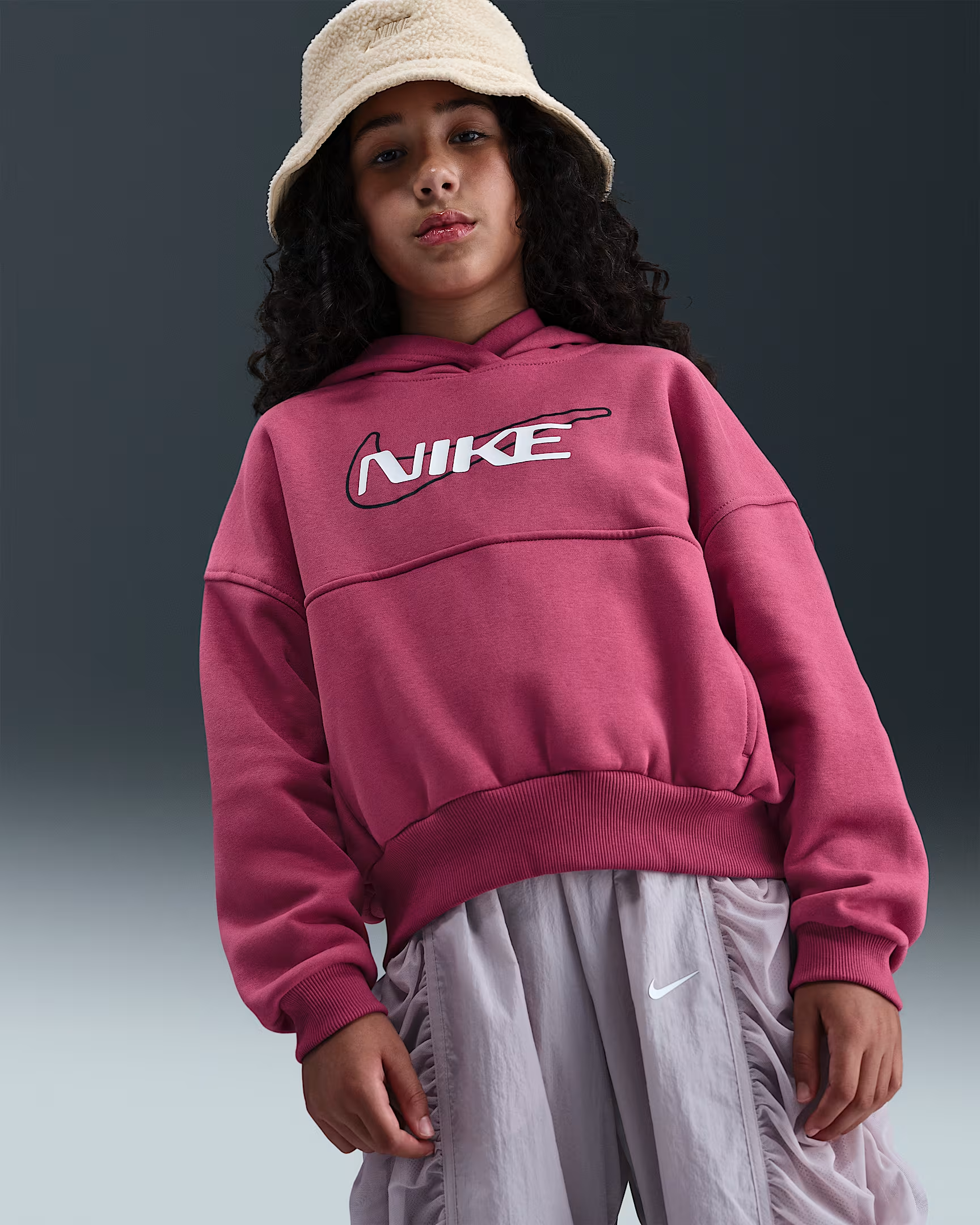

Fashion trends come and go with the seasons and decades. It has even been recorded many times how trends from a long time ago have made their way back to the surface once more. We see something and want to recreate it in our own way, spreading ideas and allowing fashion to change.
Only a decade later, the 2020s are filled with dramatic changes. With the pandemic shifting the way fashion is perceived, comfort and functionality became the main priorities of the decade. Differing from the 2010s, the 2020s fashion adapted ’90s grunge and ’80s glam into its style. Common fashion these days includes flannel shirts, oversized blazers, and ripped jeans.


Effecting how we react to people around us, the Social Proximity Effect is what subtly causes us to follow trends because of others’ influence. The Social Proximity Effect expresses that because humans are social creatures, others’ presence subtly influences us.

Because fashion trends change through the decades, it is easy to find ourselves influenced by them, wanting to wear something but feeling like we can’t. These restrictions are the very end of fashion itself, for it is a form of creativity, art, and a way to tell stories without words. To break free from these imaginary chains and be ourselves is to truly follow the art of fashion. Fashion trends do not define us; we define fashion trends.
Don’t be into trends. Don’t make fashion own you, but you decide what you are, what you want to express by the way you dress and the way to live. —Gianni Versace
